
What the Desert Teaches Us
At first glance, the desert appears remarkably simple.
A quiet palette of sand, stone, and sky stretches toward the horizon. The landscape feels open, restrained, and almost effortless.
Spend enough time here, however, and that first impression begins to change.
The desert is anything but simple.
Ancient granite formations rise from the earth as if they have always belonged there. Joshua trees twist toward the sky, each one shaped by years of wind, drought, and resilience. Cholla cacti catch the morning light with surprising softness. Creosote bushes release their unmistakable fragrance after rain. Dry washes quietly reshape the land with every passing season.
The longer you observe, the more you discover.
The desert teaches us that simplicity and complexity are not opposites.
They exist together.
Beauty Through Restraint
The desert never tries to impress.
It does not rely on bold colors or constant change to hold our attention.
Instead, it asks something different from us.
It asks us to slow down.
Only then do we begin to notice the subtle textures in weathered stone, the changing color of the mountains throughout the day, the shifting shadows beneath a single Joshua tree, or the quiet rhythm created by native plants scattered across an open landscape.
Nothing feels forced.
Everything feels intentional.
Nature Never Repeats Itself
Walk through the desert and no two Joshua trees are the same.
No two boulders share the same shape.
Every wash follows its own path.
Even the smallest stones carry their own texture, color, and history.
Yet together they form a landscape that feels remarkably harmonious.
Perhaps this is one of nature’s greatest lessons.
Harmony does not require uniformity.
It grows from relationships.
From balance.
From allowing every element to remain true to its own character while contributing to something greater than itself.
Designing With the Land
We don’t believe great desert homes begin with a style.
They begin with a place.
Before selecting materials or drawing floor plans, we ask what the land is already offering.
Where does the morning light arrive?
Which views deserve to be protected?
How does the wind move across the site?
Where does shade naturally occur?
The landscape is not an obstacle to design.
It is the beginning of it.
Architecture should never compete with the land.
It should reveal it.
A Home That Belongs
It is easy to mistake desert design for a collection of visual references.
A Joshua tree.
A cactus.
A palette of beige walls.
But these elements alone do not create meaningful architecture.
A home belongs to the desert when it reflects the qualities that make the landscape unforgettable.
Honest materials that weather gracefully.
Natural light that transforms each room throughout the day.
Spaces that invite stillness rather than constant stimulation.
Open views balanced by moments of shelter.
Architecture that feels rooted rather than imposed.
Looking More Carefully
Perhaps that is the greatest lesson the desert has to offer.
It teaches us to pay attention.
To appreciate what changes slowly.
To recognize beauty that does not demand attention.
To understand that restraint is not the absence of richness, but the presence of intention.
At Mystic Sand, these lessons continue to shape the way we think about residential design.
Not because every project belongs in the desert.
But because every meaningful home can benefit from the same principles—clarity, honesty, balance, and a deep respect for the place it calls home.
The desert never asks to be the center of attention.
It simply waits for us to notice.
And once we do, we rarely see it the same way again.
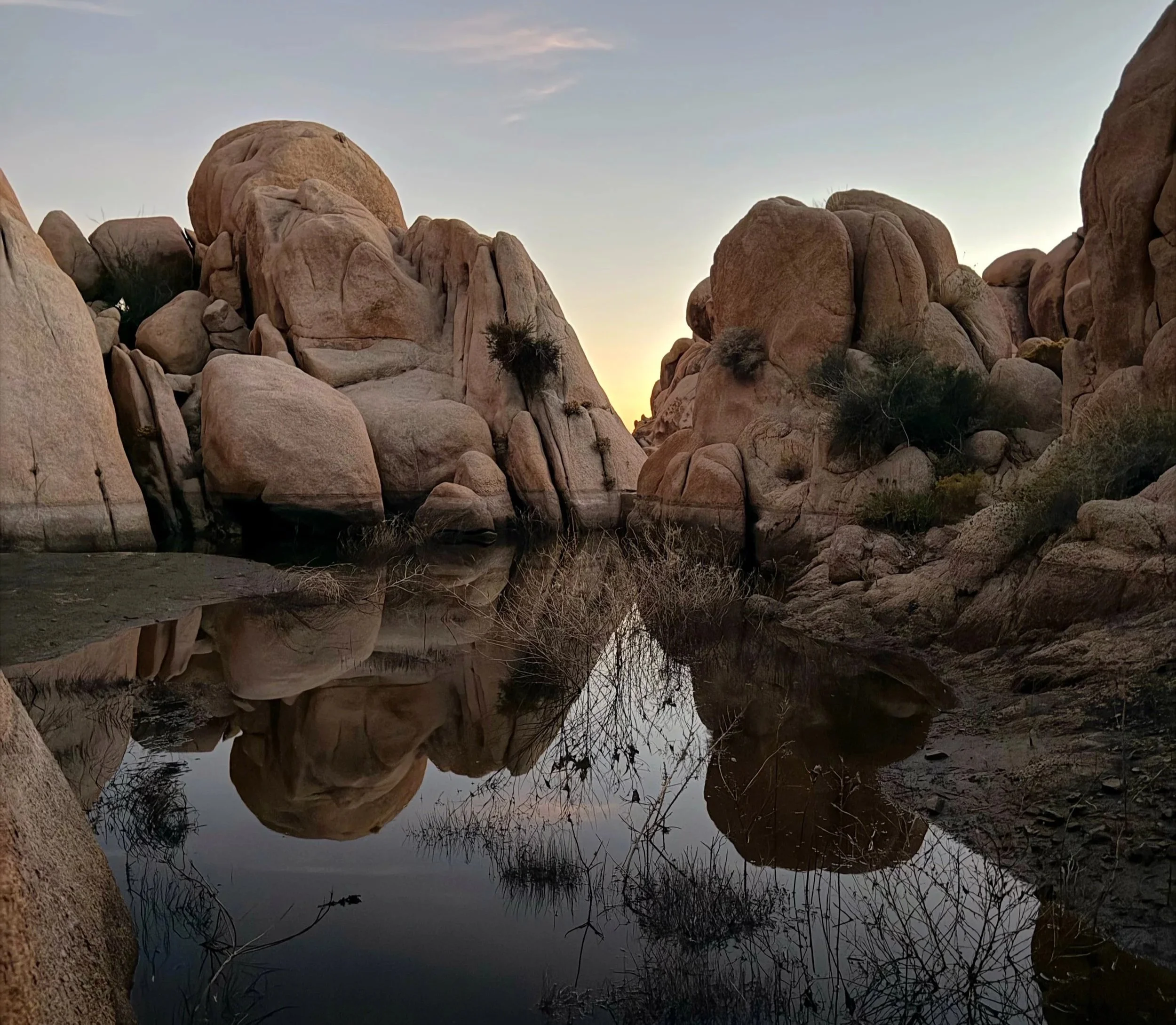
a quiet pool of water resting beneath giant boulders — the desert becomes a mirror.
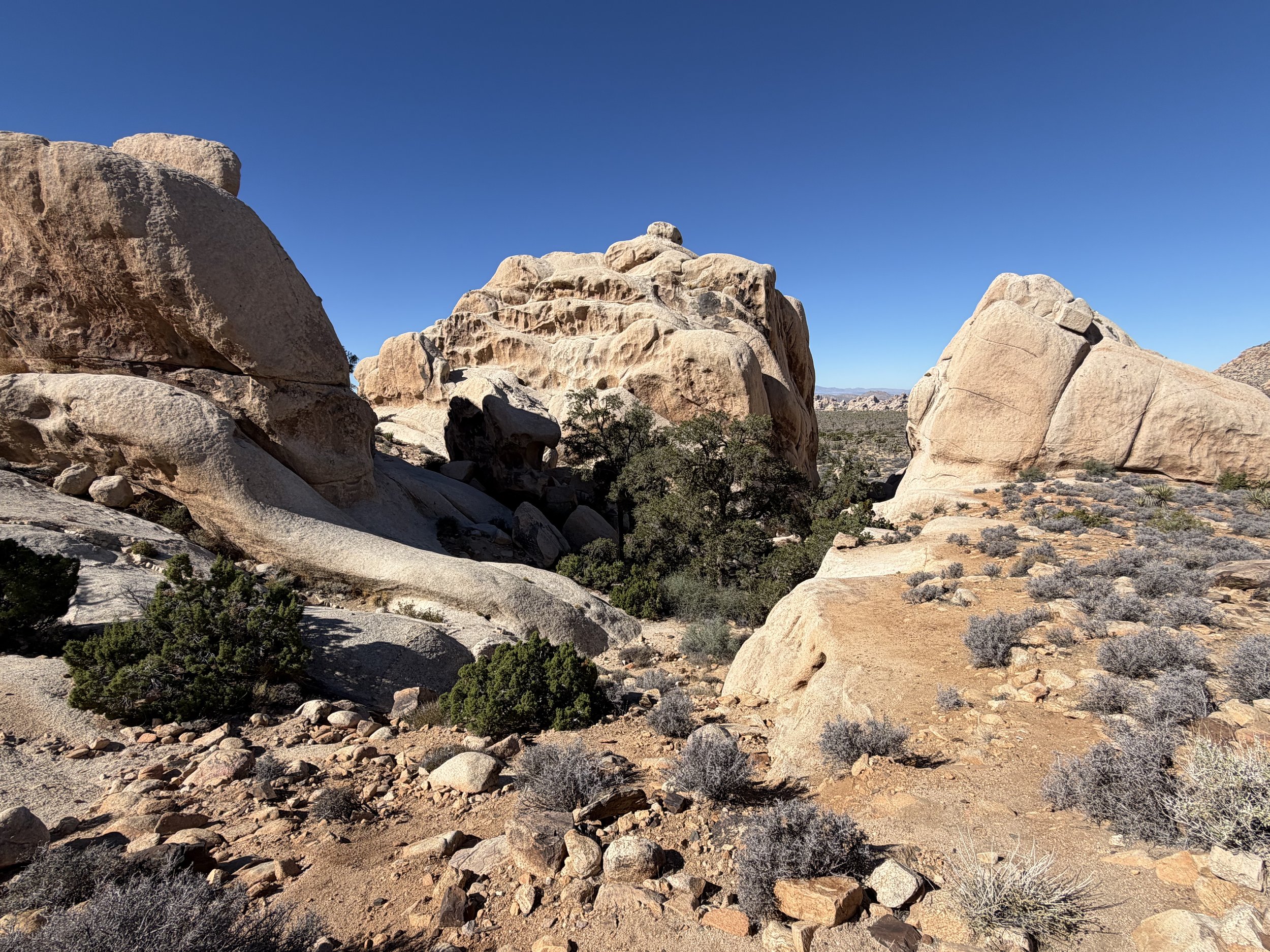
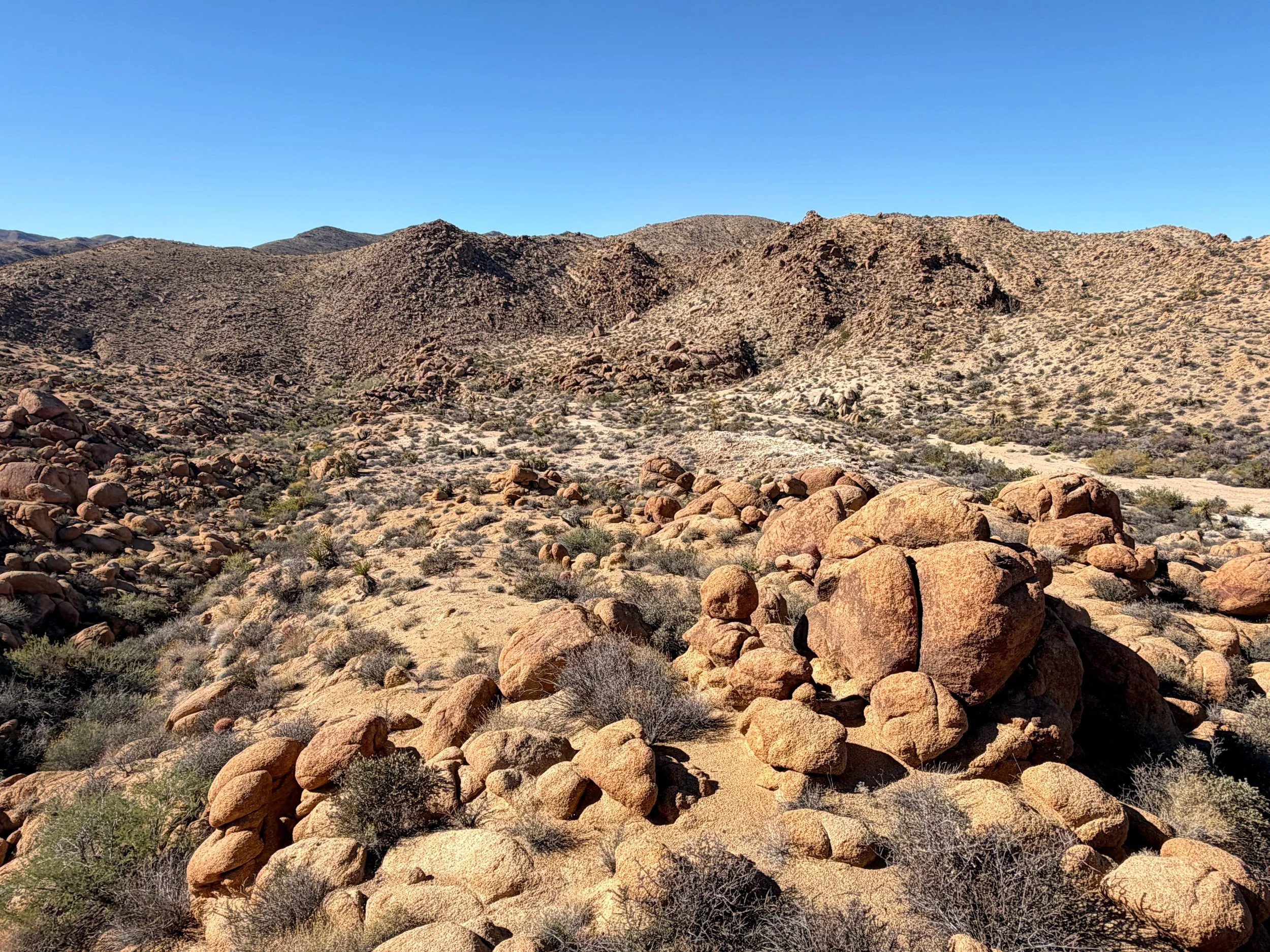
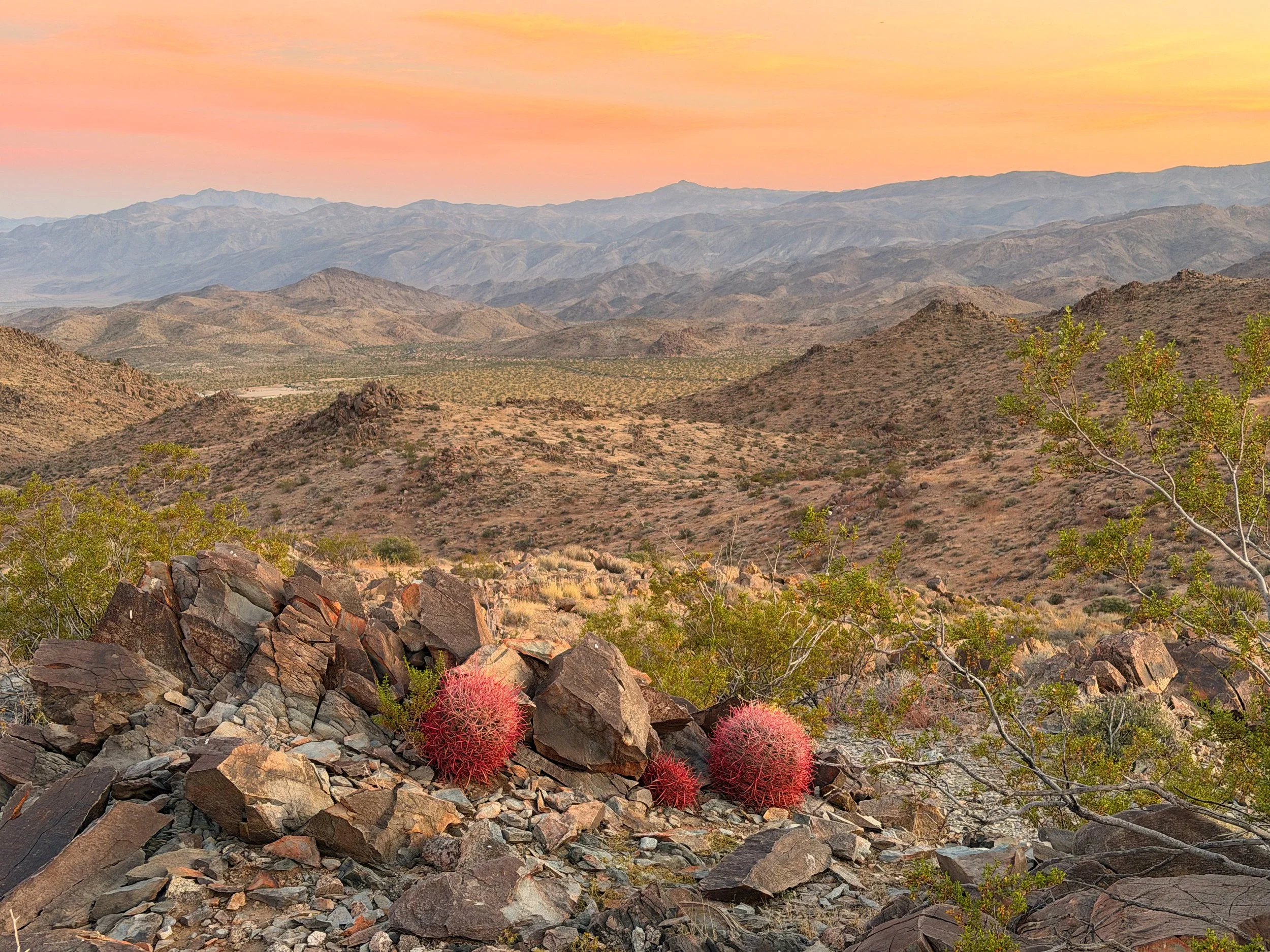
Sunset in Joshua Tree National Park
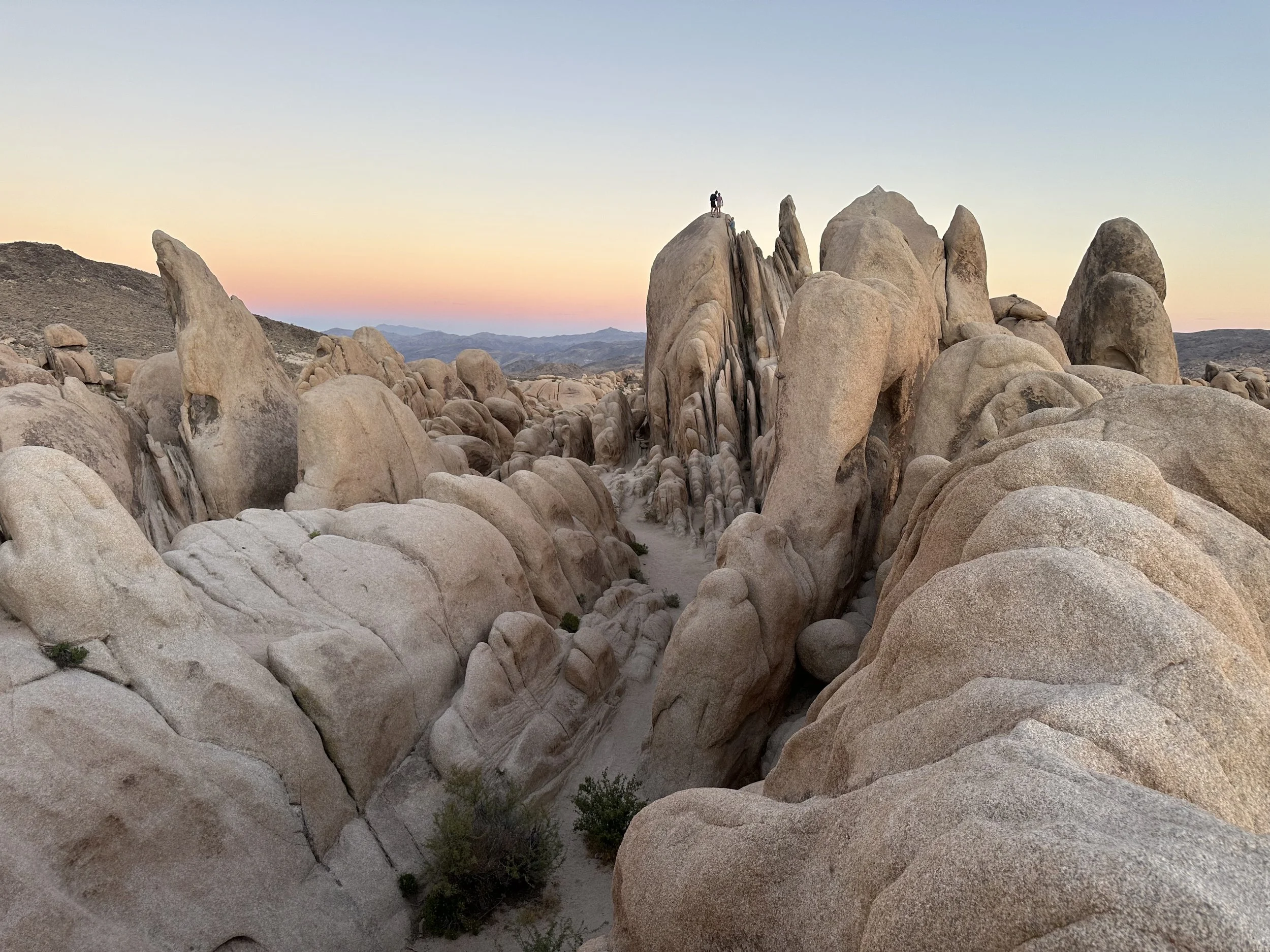
All photographs in this article were taken by Mystic Sand while exploring Joshua Tree National Park and the surrounding High Desert landscapes that continue to inspire our work.