

January 15, 2026 · Elyesaf Ozer
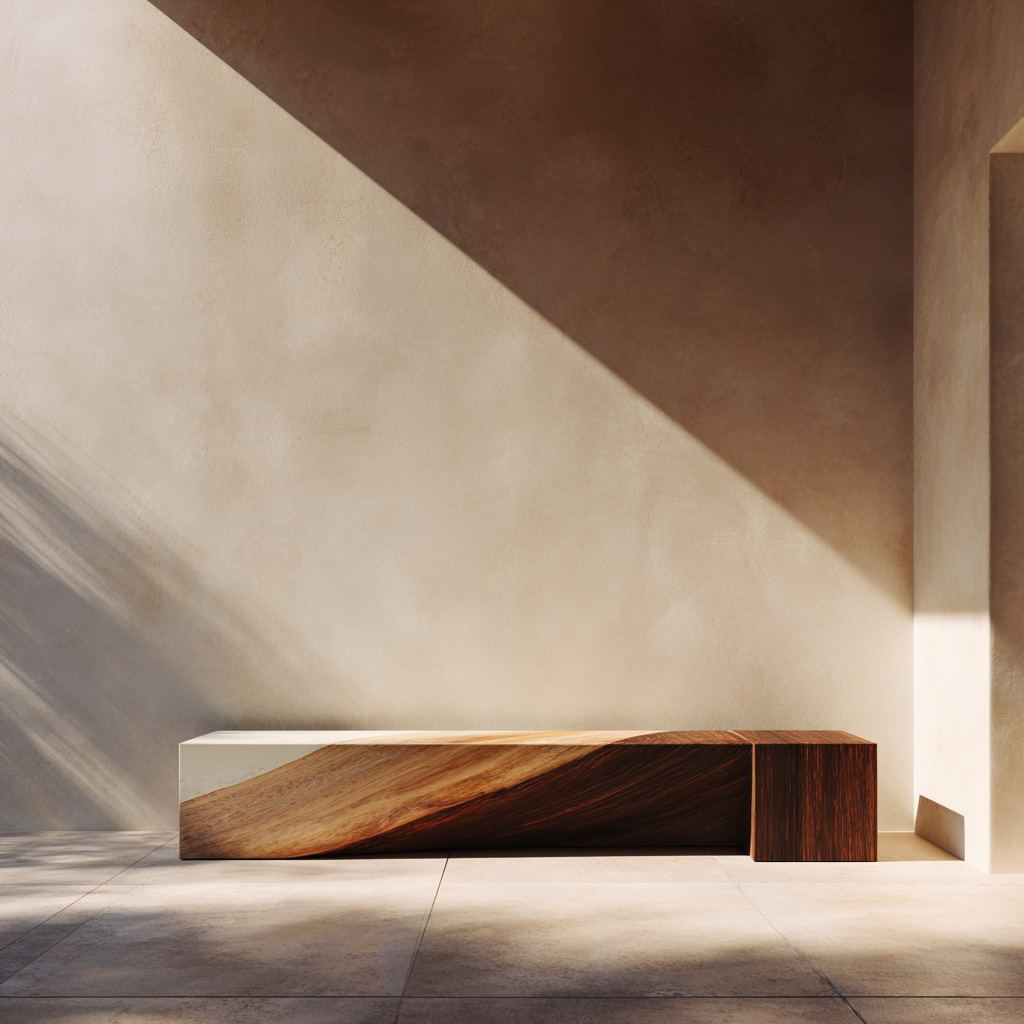
There is a quiet pressure in interior design to make everything match.
The floor should match the cabinetry. The dining table should match the shelves. Every wood tone should come from the same stain, the same species, and the same collection.
It feels safe.
Yet the homes we remember most rarely feel that predictable.
They feel collected.
Spend a few minutes walking through a forest.
No two trees are identical.
One trunk is lighter than the next. A fallen branch has weathered into silver. Stone sits beside timber. Dry grasses meet rich soil.
Nothing matches.
Everything belongs.
Nature reminds us that harmony is not created through repetition.
It is created through balance.
Perhaps our homes can learn from the same lesson.
Oak should still feel like oak.
Walnut should still feel like walnut.
Ash should never pretend to be either.
Each species carries its own grain, warmth, weight, and character.
Trying to make every wood look identical often removes the very qualities that made us choose it in the first place.
Rather than asking different woods to become the same, we can allow each one to contribute something unique.
Wood is never one color.
Morning light reveals one side of its character.
Late afternoon reveals another.
A material sample held beneath showroom lighting tells only a small part of its story.
In a home, daylight becomes part of every finish.
Sometimes it is light—not color—that quietly brings different woods together.
The most memorable homes are rarely completed all at once.
A handcrafted dining table may arrive years after the kitchen is finished.
A vintage chair might become part of the family long after moving in.
Shelves slowly fill with books, objects collected during travel, and pieces that quietly become part of everyday life.
If every new addition had to perfectly match what came before it, a home could never grow naturally.
It would remain frozen in time.
A meaningful home evolves.
Mixing wood tones is not about creating contrast for the sake of contrast.
It is about understanding proportion, craftsmanship, light, and the relationships between materials.
When those decisions are made with care, different woods begin to speak the same language.
Not because they match.
Because they belong.
Perhaps that is the difference between a house that feels designed and one that feels lived in.
The goal is never perfect uniformity.
It is quiet harmony.