
Quiet Luxury: Why Raw Materials Are the New Status Symbol (And Not Just in Fashion)
Quiet luxury has taken over the world of fashion — clean silhouettes, muted tones, and pieces that whisper instead of shout.
But in interior design, quiet luxury isn’t just an aesthetic.
It’s a philosophy built entirely on raw, honest materials.
While fashion uses soft cashmeres, natural leathers, and understated tailoring, interiors express quiet luxury even more powerfully through wood, stone, clay, glass, and organic textures.
True luxury is no longer about excess — it’s about purity, craftsmanship, and timeless restraint.
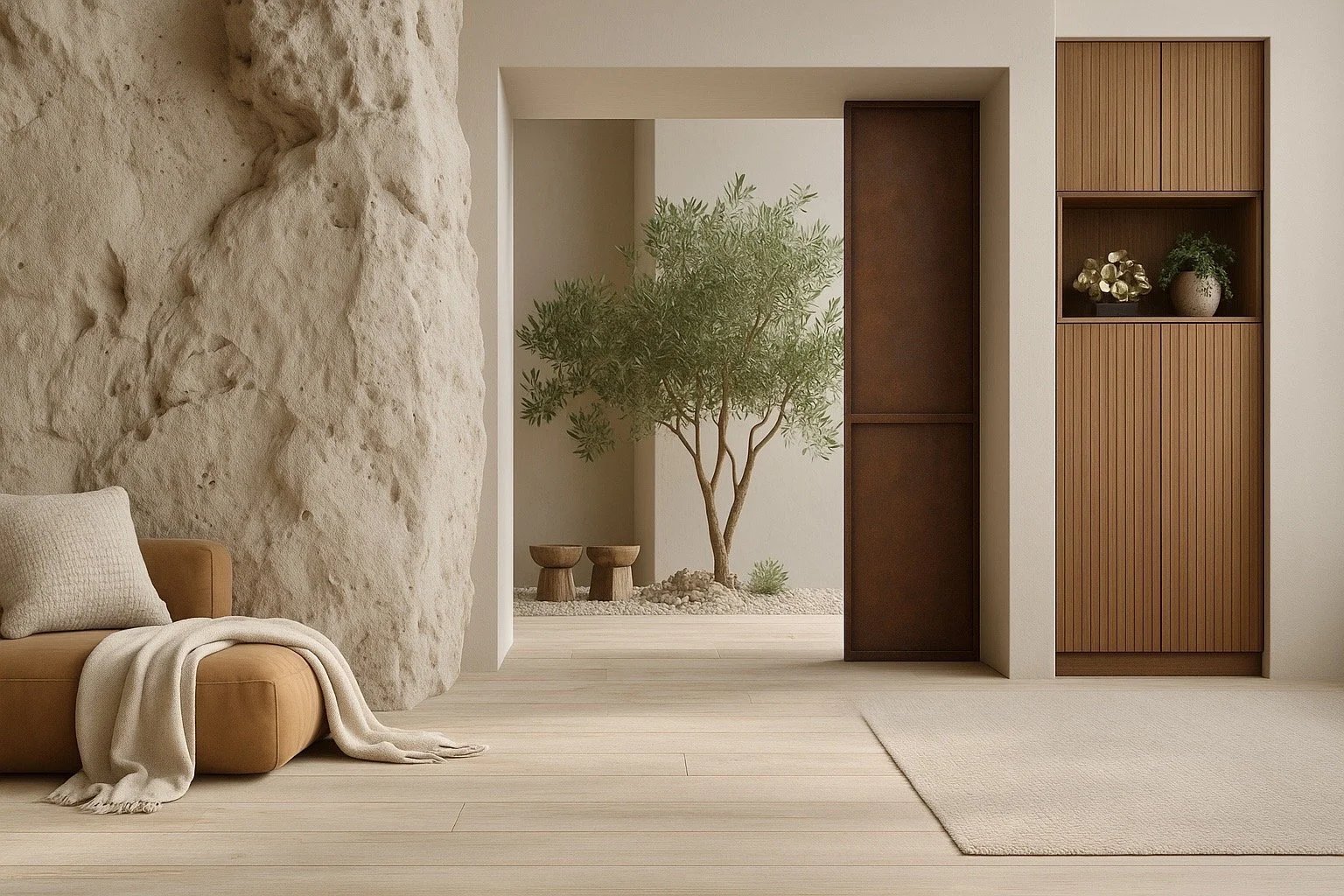
1. Quiet Luxury Starts With Raw, Honest Materials
Quiet luxury is defined by the materials themselves, not by branding or ornamentation.
In interiors, this means:
Raw stone tables
Natural wood cabinetry
Hand-finished limewash walls
Unvarnished oak, walnut, or ash
Textured ceramics
Linen, wool, cotton, jute
Earth-based plasters
Matte finishes instead of gloss
These materials age beautifully because they’re real.
Their imperfections are part of their value.
2. The Power of Texture Over Pattern
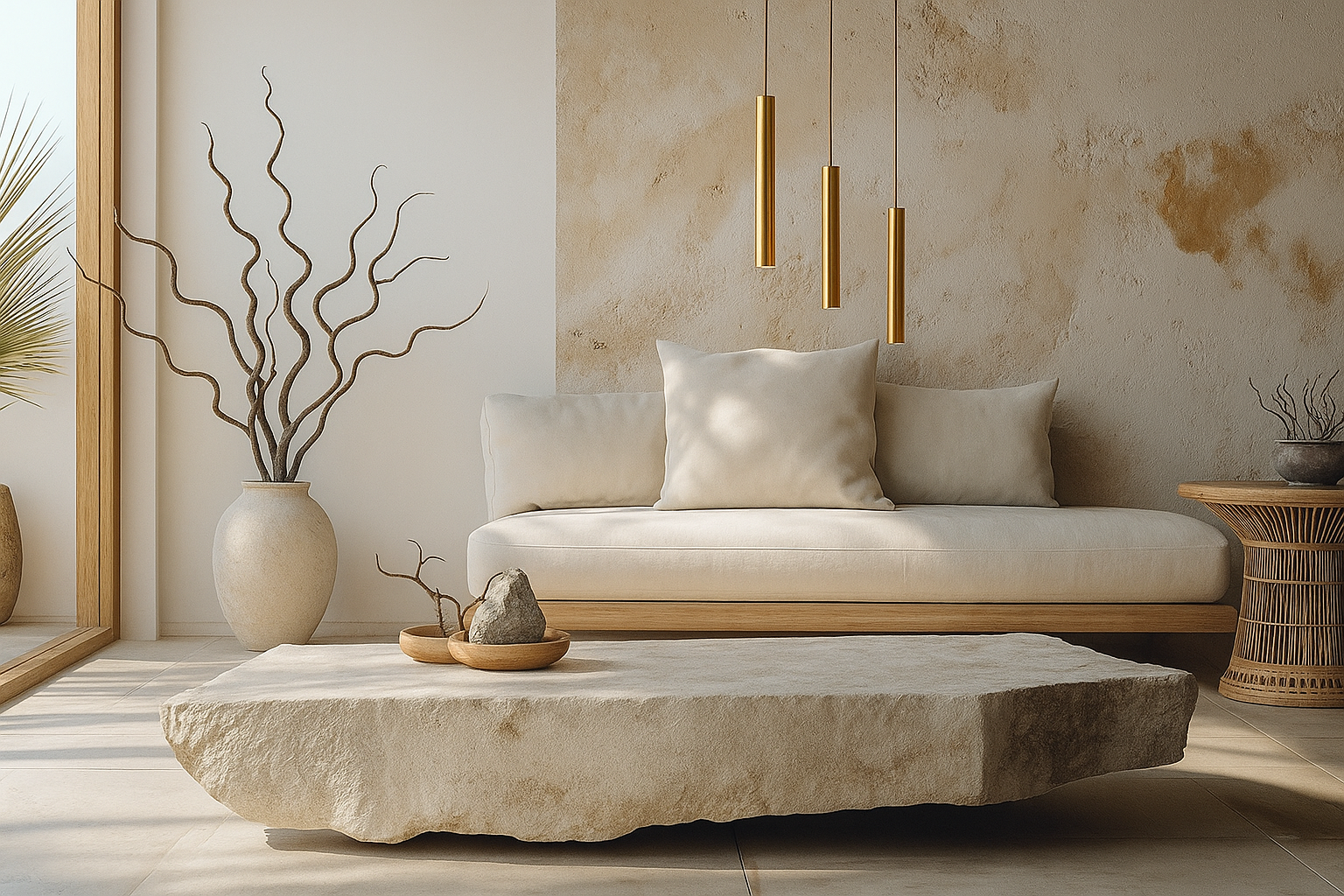
Quiet luxury avoids loud prints and heavy decoration.
It relies on texture, which feels more elevated and more timeless.
Veining in stone
Grain in wood
Movement in natural plaster
Softness in natural textiles
This is why in Mystic Sand projects, you see large raw-stone slabs, subtle wood variations, and organic textures doing the work that patterns used to do.
3. Why Raw Materials Feel More Expensive

Raw materials quietly communicate quality without trying.
They signal:
craftsmanship
permanence
natural beauty
restraint
sophistication
You can feel the weight, depth, and temperature of real materials the moment you walk into a room.
A raw-stone island or solid wood cabinet instantly elevates the home because it’s something you experience, not something that just looks good in a photo.
4. Quiet Luxury Isn’t Trendy — It Lasts
Trends fade.
Logos fade.
Shiny finishes fade.
But organic materials?
They get better with time.
Raw woods deepen, stone gains character, textiles soften.
Quiet luxury is timeless because it’s rooted in nature, not fashion cycles.
5. Quiet Luxury in Interiors vs. Fashion
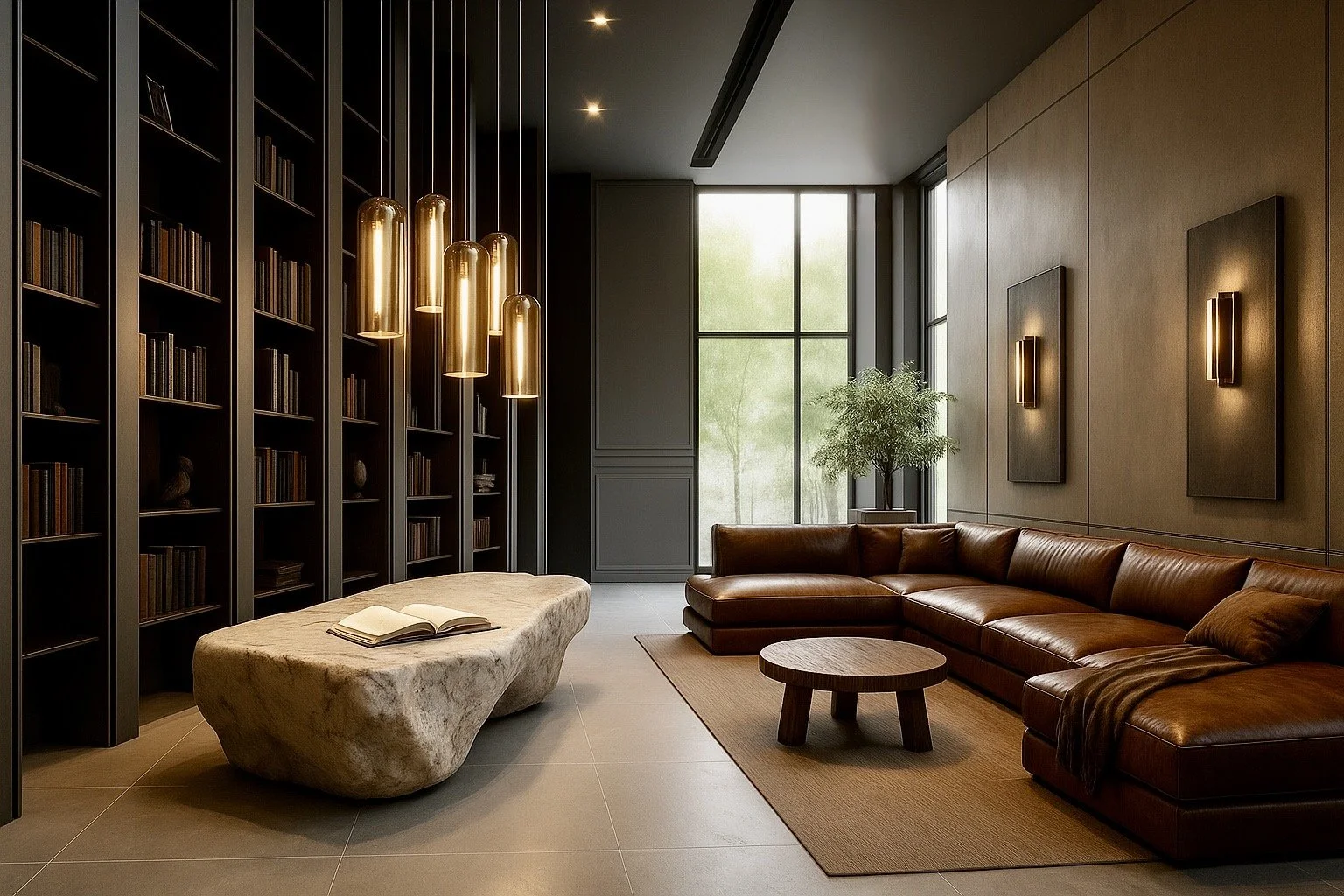
Fashion quiet luxury =
tailored cashmere
neutral tones
understated cuts
Interior quiet luxury =
raw stone
refined wood tones
natural plaster
sculptural forms
soft, earthy palettes
Both share the same DNA:
elegance through simplicity, not status symbols.
6. Mystic Sand’s Approach to Quiet Luxury
At Mystic Sand, quiet luxury is the foundation of every design.
We focus on:
Raw stone as a sculptural anchor
Layered wood tones for warmth
Minimalist lines to let materials speak
Earthy ceramics and greenery
Neutral palettes inspired by the desert
Quiet luxury is not about showing off — it’s about creating spaces that feel calm, grounded, and effortlessly elevated.
Final Thought
Quiet luxury is more than a trend.
It’s a return to authenticity.
Whether in fashion or interiors, the future of luxury is simple:
real materials, timeless design, and spaces that feel as good as they look.